Posted on 5 Comments

How to Embrace the Rhythm of Life at Home

Do you find yourself bored as a homemaker? Learn how to embrace the rhythm of life at home by infusing more meaning into your days.

At some point along the journey of homemaking, you realize that the rhythm of life at home moves differently than life in the public sphere. It is quieter, more peaceful, less busy and stressed. A slower pace means boredom for some, but it can be so much more than that.

To some people, this slower rhythm seems like a problem: if your machine is moving slower than a different one, maybe there’s something wrong with it, and it needs to be fixed.

Others get used to a faster, more exciting pace of life, and find themselves bored easily at home. They want to be where the action is.

If you have recently transitioned to the role of full-time homemaker, you know that the pace of life at home is very different from the rush of the workaday world.

Or perhaps you are passionate about homemaking, while still balancing a job outside the home. In that case, you go back and forth from home to work, adapting to different rhythms and demands.

Should home life be just as busy and exciting as the parts of our life spent in public? Or should we accept and even embrace a slower pace at home?

Is homemaking boring?

To answer this question, let’s think about the purpose of homemaking for a moment. Homemakers create homes for their families. True homes are welcoming, comfortable havens where people can find rest and good cheer.

The essence of home might be described as a place of welcome, refreshment, peace, and safety.

Homes are meant to shelter us from the world, in a manner of speaking. Yes, they can hold parties and entertain friends or family when we choose to open our doors, but our homes are the one special place where we can relax and be our private selves without having to defend our philosophical, religious, or political ideas at every turn.

Homes are where we nourish, preserve, and teach, not fight for our values.

If we look at the question in this light, perhaps it’s natural that our homes move more slowly than the outside world of busy society. After all, the goal of home is very different than the goal of public life.

Homemakers are the Gatekeepers

One thing we must be careful to do as homemakers is to keep our homes separate from the world outside. I don’t mean we should close off our homes to everything and everyone outside of our family; but we should be careful about just how much we let inside.

If we want our homes to be havens, then they can’t be too noisy or rushed.

(This has nothing to do with children. I have small children at home, and I do realize that sometimes life is very noisy!)

What I mean is that home life should move at a more leisurely pace than life in society. If we are always running from one activity to the next, that destroys the peaceful atmosphere of home.

This does not mean your life at home should be boring. Far from it! What it does mean is that you have a responsibility to set the tone in your home.

You, as the homemaker, control the pace of life in your home. Even if you have a house full of kids, your decisions about what comes in and what stays out can make a huge difference in the atmosphere of your home.

Does your home refresh you or bore you?

Let’s put it this way: if your home reflects the world outside like a mirror image, you are likely seeking happiness out there. If your home reflects your own unique family and values, you are likely seeking happiness in home and family.

This is an important question, by the way. As the homemaker, if you aren’t happy in your role, you will have a very hard time creating a happy home for your family.

If you are constantly behind on the housework and struggling to get dinner on the table because of too many activities or commitments outside the home, your family life will start to suffer.

Home might even start to become a place of tension instead of rest: a place where the to-do list awaits as soon as you walk in the door.

But if you take your role as gatekeeper seriously, and give your attention to creating a welcoming home instead of just a pretty house, your home life will flourish.

You will be happier and more satisfied with your life, and your family will find more peace within the walls of their home.

Taking time to do your tasks thoughtfully and build your daily schedule to flow peacefully adds much to the comfort of a home–for everyone, not just you!

What to do when you’re bored at home

Now, some of you have probably been cultivating a slow home life for a while. Maybe you even feel bored, like you’re missing out on everything else that’s going on in the world.

Perhaps you look at a single friend or family member and think, “Wow, her life is so exciting! All I do is stay home.”

Don’t fall into the trap of comparing, friend! We will never be able to see all the joys and pains in the hearts of every person. We have each been given one life to live, and we must live it as best we can.

The path of homemaking may not be glamorous, but it certainly doesn’t have to be boring. Homemaking can be joyful and meaningful. I would rather have that over glamor and drama, wouldn’t you?

So embrace the slow rhythm of life at home, instead of wishing for more excitement. Remember that there is a time and a season for everything, and someday you might look back wistfully to these slow and simple days.

Overcoming boredom with meaningful living

That’s all well and good, you might say, but how do I appreciate slow and simple days right now?

We have grown accustomed to getting whatever we want instantaneously, so any kind of waiting seems irksome to our generation. Perhaps what we need is to refocus on the meaning of the things we do, instead of how fast we can get them done!

Slow living does not mean moving slowly about our tasks, or staring out the window because there’s nothing else to do. It is intentionally removing distractions from our lives in order to appreciate the simple things and make life more meaningful.

Slow living means doing things for a purpose, and doing them thoughtfully. It is realizing that faster is not always better: getting more done can actually be less productive, if the goal is to live a meaningful life.

There are plenty of tools to help you be more productive, whether at home or at work. Technology has gotten so advanced that computers can do all sorts of tasks for us. But at the same time, it has robbed us of the enjoyment of life.

Enjoying life by keeping things simple

I don’t want machines to do all of my housework. I would rather feel the solid wooden broomstick and hear the swish of the broom straws against the kitchen floor.

I would rather light a candle and watch the flame dance while it melts the sweet-smelling wax, instead of living under the constant glare of bright incandescent lights.

The true secret of happiness lies in taking a genuine interest in all the details of daily life.

William Morris

There is a lot of truth in this simple statement. Paying attention to the small details can turn an irksome task into a creative, or at least loving, endeavor.

Utilitarianism has reduced many actions to the standard of productivity. In a world of mere utilitarian production and consumption, there is no room to appreciate the beautiful, the solemn, the heart-wrenching.

By embracing a slower way of life at home, we can infuse more meaning into our days.

Ways to embrace a slow rhythm of life at home

Here are some ways to make your life at home more meaningful, which will help you to overcome boredom and appreciate the slower pace:

1. Structure your days

What makes you feel bored or aimless quicker than a day with no plans?

The solution is to manage your time so that you always have something to look forward to, instead of an endless afternoon stretching out before you with no plans. This will help you to appreciate your time more, and use it wisely.

One simple thing you can do is to set up a housekeeping schedule. Even if you don’t need a schedule to get all the housework done, sometimes just having one or two tasks penciled in for the day is enough to get you motivated!

This is also a solution to the problem of frustration of feeling like you’re not getting anything done during the day. Just by writing out a simple schedule, you can plan time for hobbies or meeting a friend, instead of feeling like you don’t have time for anything fun.

2. Observe tea time

If you will be staying home most of the day, why not set aside some time in the afternoon to take tea?

You can invite a friend over and pop a batch of scones in the oven, or just sit down with a pretty teacup and gaze out the window for ten minutes. It doesn’t have to be an hour.

A short break in the afternoon lends structure to your day and grants a reprieve from whatever task you have been working at.

3. Walk daily

Getting outside every day is important, especially for homemakers. If not for my daily walks, there would be many days wherein I did not set foot outside my door!

Somehow, we always remember that fresh air is good for children, but it’s good for us grown ladies as well! Spending some time outside each day will help to clear your mind and sweeten your temper.

Moderate exercise is also beneficial for calming scattered nerves and helping you sleep better.

Brisk walks have been my remedy for stress and anxiety for years now. They help me breathe deeply and focus on something besides my problems.

4. Start with a morning routine

Slow, cozy mornings are my favorites. But if I’m not careful, time can slip away from me, and I look up to find the morning half gone and the breakfast dishes still not done!

To prevent this (and the accompanying feelings of guilt and desperation), try making a morning routine.

It can be a simple list of the tasks you need to complete by noon on a particular day, or a shorter, more generic schedule for every morning.

If you don’t know what to put down, read Samantha’s article about morning routines for some inspiration!

Just having a little something to get me started on the day’s work is helpful when I’m moving slowly!

Add structure for a purposeful life at home

You may have noticed that all of these ideas involve adding some sort of structure to your daily life. I think this can be a problem area for many homemakers, whether they find themselves with too much or too little to do during the day.

As homemakers, we set our own schedules.

Did you hear that? WE SET OUR OWN SCHEDULES. That means there is no schedule unless we make one!

It’s hard to really embrace the rhythm of life at home if there is no rhythm or pattern to your days. Setting a simple plan, even if it’s not an outright schedule, can help you feel much more settled and purposeful in home life.

Do you find yourself bored as a homemaker? Learn how to embrace the rhythm of life at home by infusing more meaning into your days.

I hope these ideas help you to find your rhythm of slow, simple living at home.

If you would like to read more about finding joy and purpose in simple, intentional homemaking, check out my Guide to Intentional Homemaking!

Happy homemaking!

~ Kimberly

Posted on Leave a comment

Baked Butternut Squash with Cranberries

Looking for a festive side dish for a holiday meal? This Butternut Squash Bake with Cranberries is full of bright colors and harvest flavor!
This Butternut Squash Bake with Cranberries is full of bright colors and harvest flavor! A crunchy topping of oats, pecans, and dried cranberries is sure to delight your family!

Looking for a special side dish to go with a holiday meal? This baked butternut squash with cranberries and pecans is full of delicious flavors that complement each other perfectly! The vibrant colors will liven up any meal with deep orange and crimson.

This sweet, creamy side dish goes well with roasted chicken or turkey. Cooking the squash ahead of time lets you whip up this dish in just 20 minutes! Now that’s a side dish even I can manage!

Jump to Recipe

As winter settles in, I have been craving squashes and warm winter comfort foods. Soup is my go-to for nutritious, comforting winter fare. However, there are only so many soups I’m allowed to make in a week, so I had to get creative and find other uses for my beloved squashes.

This recipe was adapted from one my mother has made for years. Her butternut squash bake has been a part of Thanksgiving and Christmas dinners for as long as I can remember.

The original recipe is wonderful as it is, but I was hoping for something a little different. The results were even better than I expected! This pretty side dish has already become a part of our family traditions!

Method

Cook your squash

I like to cook squashes ahead of time, in the oven, while I’m baking something else. That way, I’m not heating the oven just for squash, and the cooked squash has plenty of time to cool before I need it. No more burnt fingers while trying to peel the skins off of steaming squash!

You can store cooked squash in the refrigerator for a few days before using it.

To prepare your squash for cooking, cut in half lengthwise with a large, sharp knife. If your squash is very large, you may wish to cut it widthwise first, so the pieces will be smaller and fit in a pan better.

Scoop out the pulp and seeds with a spoon and discard. Place the squash pieces cut side down in a baking pan with sides. Butternut squashes do not have as much water in them as pumpkins, but I’m still wary of spilling any hot juices.

Place the pan on a low rack in a hot oven, and cook until the squash is very tender. This will take between one and three hours, depending on the size of the squash and the oven temperature.

Oven temperatures between 300-375 degrees F will work for cooking squash. Be careful with higher temperatures, as the squash can burn before it cooks through. If I am using my oven specifically for cooking squash, I heat it to 350 degrees F so it won’t take all day!

When the squash is cooked, cool it in the pan. When cool enough to handle, peel off the skin. You may mash or puree the cooked squash to obtain an even texture.

Prepare the squash bake

Preheat your oven to 350 degrees F. Butter a 13×9″ baking dish or 1.5 quart casserole dish.

Put the cooked butternut squash in a large mixing bowl. If you have not mashed it yet, do so now.

Note: if the squash has been refrigerated, I recommend warming it in the microwave or on the stove before you add the other ingredients. This step isn’t absolutely necessary, but it will help everything mix together evenly.

Add the butter and mix well. If the squash is warm enough, the butter will melt right in. If your squash is cold, you will want to use softened butter so it will mix in better.

Add the sugar, eggs, light cream, and vanilla. Mix well, scraping the sides of the bowl.

Pour the squash mixture into the prepared pan. Bake for 30 minutes.

Prepare the topping

In a small bowl, mix together the butter, brown sugar, oats, cinnamon, allspice, and chopped pecans. Stir in the dried cranberries.

Remove the squash bake from the oven after 30 minutes of baking. Sprinkle topping mixture evenly over the surface.

Letting the squash mixture bake partially allows the top to firm up enough that the topping won’t sink into the filling. You want it to sit nicely on top!

Return the pan to the oven and continue to bake for another 25-30 minutes, until the filling is set and the topping is lightly browned.

Remove from the oven and cool slightly before serving.

Looking for a festive side dish for a holiday meal? This Butternut Squash Bake with Cranberries is full of bright colors and harvest flavor! A crunchy topping of oats, pecans, and dried cranberries is sure to delight your family!

This recipe goes well with Cranberry Scones!

Happy baking!

~Kimberly

Baked Butternut Squash with Cranberries

This festive side dish will add bright color and sweet flavors to your special meals!
Prep Time15 minutes
Cook Time55 minutes
Total Time1 hour 10 minutes
Course: Side Dish
Cuisine: American
Keyword: Butternut Squash, Cranberry, Holidays, Squash
Servings: 12
Author: kimberly

Ingredients

  • 3 cups butternut squash cooked, mashed
  • 1/3 cup butter softened
  • 3/4 cup sugar
  • 3 eggs lightly beaten
  • 1 cup light cream or half & half
  • 1 tsp vanilla extract

Topping Ingredients

  • 2 tbsp butter melted
  • 1/4 cup brown sugar
  • 1/4 tsp cinnamon
  • 1/4 tsp allspice
  • 1/2 cup rolled oats
  • 1/4 cup pecans chopped
  • 1/3 cup dried cranberries

Instructions

  • Preheat your oven to 350 degrees F. Butter a 13×9" baking pan or 1.5-quart casserole dish.
  • Place the mashed, cooked butternut squash in a large mixing bowl. Add the butter and mix well.
  • Stir in the sugar, eggs, light cream, and vanilla extract.
  • Pour the squash mixture into the prepared pan. Bake for 30 minutes.

Prepare the Topping

  • In a small mixing bowl, combine the melted butter, brown sugar, cinnamon, allspice, oats, and chopped pecans. Mix well.
  • Stir in the dried cranberries.
  • Remove the squash bake from the oven after 30 minutes. Sprinkle the topping mixture evenly over squash.
  • Return the pan to the oven and continue to bake for 25-30 minutes, until squash is set and topping is lightly browned. Cool slightly before serving.

Notes

For instructions on roasting butternut squash for this recipe, see Method above.
Posted on 2 Comments

Preparing for a Simple, Meaningful Christmas

Have yourself a simple Christmas by planning for what matters most.
Have yourself a simple, meaningful Christmas by planning for what matters most.

It may be the peak of fall where you live, or maybe even spring, but here at our house, winter has arrived. The ground is covered with snow (which has not stopped falling since yesterday), temperatures have stayed below freezing for the last week, and our snug little cabin suddenly feels much smaller since the unpacking of winter coats and mittens!

My 3 year-old was running around excitedly this morning, asking if we could get a Christmas tree and read all the Christmas books again! Oh, to be a child! I hate to dash his hopes, but we are not going to celebrate Christmas two months early!

Still, it got me thinking about the approaching season of festivity. Maybe it’s not such a bad idea to start planning and preparing, even though Christmas is still far away.

Planning for a Simple Christmas

Planning ahead gives us the opportunity to celebrate special days in meaningful ways. It lets us choose intentionally which customs are good for our families, instead of getting swept along with the popular culture.

It also helps us to remain peaceful throughout what can be a busy season, knowing that there is a plan in place and we don’t have to do everything all at once.

Here are some ways that my family prepares intentionally for Christmas and the surrounding holidays. I hope they help you to keep Christmas simply and joyfully!

Which days are you celebrating?

The commercial holiday season starts the day after Thanksgiving (or earlier), and ends on December 25, or January 1 if you’re lucky. After that point, holiday items disappear from the stores, radio stations resume their normal selections, and evergreens can be spotted lying bedraggled and lonely on sidewalks or in backyards.

Did you ever stop to wonder why we celebrate this way?

A month of festivities beforehand makes Christmas Day seem unimportant. People are already surfeited by the premature onslaught of holiday cheer. Wouldn’t Christmas (and Thanksgiving, and New Year’s Day) be more special if that particular day was given more significance?

What I’m suggesting here is, don’t party early. My family’s tradition, along with many cultures, is to save the celebrations for the holiday itself.

Instead of breaking out the decorations and putting up a tree at the beginning of December, we wait until a few days before Christmas. Instead of partying all month long, we use those weeks before Christmas to prepare our hearts and our homes.

During the secular holiday season between Thanksgiving and Christmas, we celebrate the season of Advent. This is a time of waiting, of looking forward joyfully to the coming celebration of Christmas. It’s a special time of preparation for a special day… or season, in fact.

Yes, we do celebrate Christmas as a season — just not on the same days as the secular culture does. For Catholics, the Christmas season begins on December 25 with the feast of Christ’s birth, and it continues until the feast of Christ’s Baptism in the Jordan (which is the Sunday after Epiphany).

This way of celebrating makes sense to me. We don’t celebrate birthdays before they happen, so why would we celebrate Christ’s birth early?

Furthermore, the Advent season of anticipation has always been one of my favorite seasons! It helps me to appreciate Christmas so much more when I spend four weeks reflecting on the meaning of the day, without all the distractions and whirlwind activity which characterizes December for so many people.

Advent is for quiet preparations

I said before that Advent is a time of preparation. Just like the nine months of pregnancy, there’s more to it than merely waiting for a baby to be born.

Advent is about preparing our hearts and our homes to welcome Christ when He comes: at Christmas, when we celebrate His birth, and at the end of the world, when He will come as the Just Judge.

Reflecting on these two comings of Christ makes Christmas more than merely a nostalgic time for family and friends. Advent gives us the opportunity to sweep out our hearts and homes to make room for Christ.

This requires a sort of quiet, thoughtful preparation. This time of waiting is by no means boring: there is plenty to do between cleaning house from top to bottom, making and wrapping gifts for loved ones, and preparing delicious foods for the coming festivities.

But it shouldn’t be too busy, too full, too loud and distracting. There should always be space for reflection, and time spent intentionally cultivating family traditions.

Keeping Advent at Home

How do you keep things quiet in the midst of the hustle and bustle of the holiday season? Well, you can’t change the secular culture, but you don’t have to let it into your house. Here are some suggestions to keep Advent quiet and meaningful:

Don’t throw a Christmas party before Christmas

What gets you in the “holiday spirit” more than a party? I’m not a Grinch, and I do like parties, but a Christmas party on December 10th seems a little premature, doesn’t it?

The time between Christmas Day and New Year’s (or Epiphany, January 6) is a wonderful time to celebrate with family and friends. If you’re invited to a Christmas party during Advent, it’s up to you. I personally don’t see any harm in going to such parties, provided they don’t take away too much of your peace of mind!

You can always explain to friends or relatives that you would rather wait until Christmas before celebrating. They might think you’re nuts, but they just might reschedule the party!

Don’t play Christmas music in your home before Christmas

I love Christmas music so much that, as a child, I would start playing it in August! Nowadays, I still love it, but I would rather save my enjoyment of it until Christmastime.

During December, we sometimes play music from “The Nutcracker” ballet or parts of Handel’s “Messiah.” There are some secular songs often played during December which are fine for Advent: “Winter Wonderland,” “Sleigh Ride,” and even “Santa Claus is Coming to Town” are a few. These songs are about winter, or waiting for Christmas.

If you search for it, you can find lots of music that is winter-themed instead of specifically about the holiday. But do save the Christmas carols for their proper season!

This really helps if you have young children, who get excited easily! Music that keeps them thinking about Christmas all the time makes the waiting that much harder for little ones.

Do you think the Christmas season is too short to enjoy all of your favorite Christmas songs? Have a caroling party! Whether you walk around your neighborhood singing door to door, or gather ’round the piano at home, this is a wonderful way to keep celebrating Christmas after December 25.

Bake Christmas cookies early, but save them

Have you ever turned away from a tray of goodies on Christmas because you just don’t want any more sweets? When you celebrate for a month before the actual holiday, the novelty wears off — and the significance is utterly lost.

We bake cookies on particular days throughout December to mark special feast days. We enjoy some of the cookies that night, and then freeze the rest for Christmas.

This is a double win for me: we get to celebrate the smaller feasts throughout December in a special way, and I don’t have to worry about baking a ton of cookies when I’m planning Christmas dinner!

You can read more about traditional cookies to make during Advent if you would like!

Make your decorations meaningful and simple

In keeping with the quiet spirit of Advent, we do not decorate much until a few days before Christmas, with one exception.

I make an Advent wreath at the beginning of Advent, and each evening, we light candles and say special prayers together. I love the scent of freshly-cut evergreens, and the tradition is important to our family.

As far as other decorations go, use your judgment. How do you want your house to feel during Christmastime? Festive decorations are fine, but I don’t want a jubilant feeling in my house much before Christmas, if I can help it.

Some people decorate slowly throughout December: first a nativity scene, then some greenery, and then the rest of it goes up a week or two before Christmas.

(One of the effects of living in a small cabin means not owning a lot of decorations, so it takes me approximately half an hour to decorate!) You might need more time, and thus it may make sense for you to start decorating earlier than I do.

What about Christmas trees?

I love Christmas trees, for their rich significance and tradition. If you’ve never looked up the early German traditions, or sung the original (translated, of course!) verses of “O Tannenbaum”, I encourage you to do so as a family activity.

After learning more about them, I was able to adopt my husband’s tradition of lighting the tree after sunset on Christmas Eve. We decorate our tree a few days before Christmas, but don’t light the tree lights until Christmas Eve, per a centuries-old tradition.

It’s a joyful and magical event when the father says a blessing over the tree, and all the lights begin to twinkle in the dusk. Then you know it’s Christmas!

The true meaning of Christmas can't be found in holiday hustle and bustle. Here's how to quiet your home and your heart this December.

***

For more ideas about keeping Advent and Christmas, I highly recommend Kendra Tierney’s book, “The Catholic All Year Compendium.” *This is an affiliate link. Read my full disclosure here.*

I hope these Advent and Christmas traditions help you to slow down and make your celebration more meaningful this year. I love Christmas, and waiting for it has helped me to appreciate this special season so much.

~Kimberly

Posted on 2 Comments

7 Natural Cold Remedies to Make at Home

Here are seven household remedies for strengthening your immune system this fall & winter!

Fall is here, which means that cold and flu season is just around the corner. Not that that’s something to look forward to, but it is good to be prepared for it!

I’m a big fan of simple living and natural wellness. I make sure my family gets a lot of immune-boosting nutrients in their diets, especially during the fall and winter.

Here is a collection of natural cold remedies to boost your immune system and help fight viruses and bacteria. These are all treatments that I’ve recommended to patients (in my former work as a nurse practitioner), and use at home for my own family.

Echinacea & Zinc

Echinacea purpurea

When it comes to relieving cold symptoms, some of the first things I turn to are echinacea and zinc supplements. Echinacea is a flower and zinc is a mineral, but I listed them together because they work well together and you can find them combined in supplements.

Echinacea is one of nature’s powerhouses for the immune system. It fights viruses that cause colds particularly well: it can shorten your cold symptoms by up to 50%! That means if it normally takes 10-14 days for a cold to run its course, taking echinacea can reduce that duration to 7 days.

Some studies have shown that echinacea increases white blood cell count and can help prevent colds, as well. You can take echinacea in capsules, teas, or chewable tablets, sometimes combined with zinc.

Zinc is an essential trace mineral which has many effects in the human body, including playing an important role in immune function. Zinc is directly used in making white blood cells, and it is part of hundreds of different enzymes which affect immune function.

Taking extra zinc when you’re sick is beneficial because your body is trying to make more white blood cells to fight off the bacteria or viruses. If you want to increase zinc in your diet instead of taking supplements, you can find it in meats, shellfish, legumes, seeds & nuts, dairy products, and whole grains.

Honey & Lemon Juice

Candied ginger and fresh lemon juice & zest pair nicely in these scones.
Fresh lemon juice is full of antioxidants! Pair with ginger and/or honey in tea or by the spoonful!

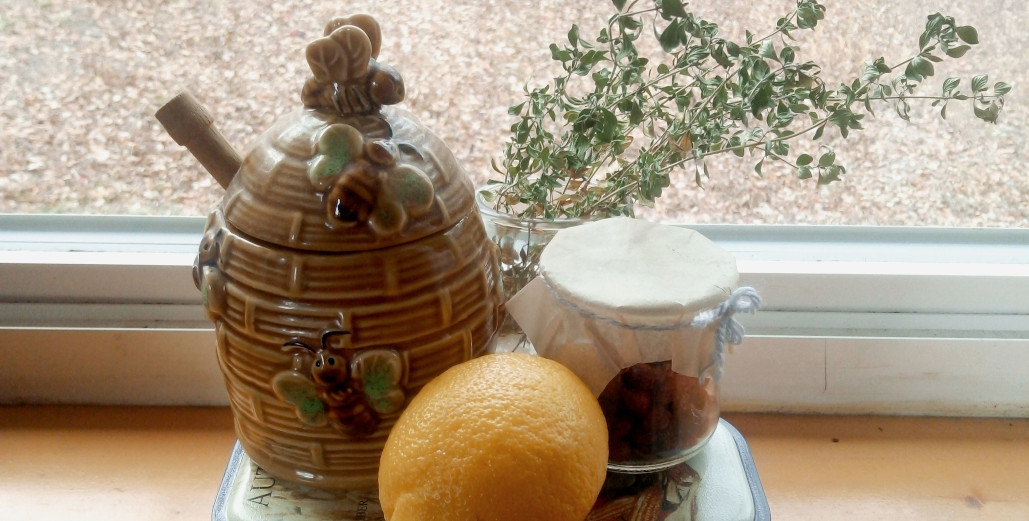
This is an old home remedy that really works! I used to recommend a spoonful of honey with a squirt of lemon juice to my patients for sore throats. The honey soothes inflamed tissues and suppresses the cough reflex, while the lemon juice loosens mucus draining from the nasal cavity or sinuses.

This is especially great for kids, as a natural alternative to cough syrup. There are no dyes or high fructose corn syrup, and you don’t need to wait hours between doses. Plus, it tastes great! I don’t know any kids who will refuse a spoonful of honey!

*Important: Do not give honey to infants under 1 year of age.*

In addition to its throat-soothing effect, honey has strong antioxidant, anti-inflammatory, and antibiotic effects in the body. It has been used in traditional medicine for thousands of years.

Lemon juice is a good source of vitamin C and potassium, which is always good when you’re sick. The essential oil derived from lemon peel has more powerful immune-boosting effects, so using lemon and other citrus essential oils can help prevent illness from spreading.

Spiced Cranberry Tea

Who doesn’t love a hot drink full of the spicy flavors of cinnamon and cloves? This comforting beverage is similar to wassail, but it’s full of immune-boosting ingredients to help your body fight viruses and bacteria.

This tasty, rose-colored drink is very simple to prepare, and yields about three quarts. It freezes well, so you can pull a quart out of the freezer whenever you start to feel under the weather- or if you have been around people who are sick.

Cranberries, cinnamon, cloves, orange, lemon, and honey each have beneficial effects on the immune system. Combine them all in one drink, and you’ve got a recipe for wellness to sip all the way through cold and flu season! You can find the full recipe for spiced cranberry tea on my blog.

Homemade Chicken Soup

Shop your own pantry to find the common ingredients for these comforting, simple meals!

Don’t laugh at this one! Of all the natural cold remedies, this may be the most underrated. There’s a good reason why homemade chicken soup is nicknamed the “Jewish Penicillin.” Chicken soup has several different elements that can reduce inflammation in upper respiratory infections, according to some studies.

Plus, warm liquids are easy to consume even if your throat is sore. If you make the soup with bone broth, that adds even more nutrients to the mix. Bone broth has long been given to people who are ill or convalescing because of its healing effects.

Rose Hip Tea

Dried Rose Hips
Foraging this fall yielded lots of rose hips for drying and using in recipes!

Another great option for immune-boosting drinks is rose hip tea. This was traditionally used for treating scurvy! Rose hips contain a LOT of vitamin C: about 25 times as much as oranges! They also contain vitamins A, B, E, and K, as well as the essential minerals iron, calcium, and phosphorous.

To make tea from dried rose hips, crush as fine as possible with a mortar and pestle or a blender. Place approximately 1 teaspoon of rose hip powder or pieces into a teapot. Fill teapot with boiling water and allow it to steep for 5 to 10 minutes. (UAF Cooperative Extension)

Or combine rose hip juice with honey and lemon to taste for even more vitamins!

Salt Water Gargle

Gargling with salt water solution (5 mL salt to 500 mL purified water) can help prevent you from getting sick as well as relieve the discomfort of a sore throat.

Salt inhibits bacterial growth by maintaining a healthy pH balance in your mouth. If the pH level drops too much, it is easier for bacteria to grow and potentially cause disease or tooth decay. Gargling with salt water restores the pH balance and flushes bacteria out of the mouth.

Salt also acts as a natural remedy for sore throats because of its local anesthetic effect. It soothes the pain from swollen glands and raw surfaces in the mouth and throat. It can also decrease inflammation.

Rest & Fluids

winter tea

When talking about natural cold remedies, I think these cannot be emphasized enough. People are so busy these days, and they don’t make rest a priority, even when they are sick. It is so important to slow down, lie down, and close your eyes more when you are sick!

Most of the body’s restorative processes happen while you are sleeping, so it makes sense that you need more sleep to recover from an illness, even a minor one. I know when I don’t take it easy because “it’s just a cold,” my symptoms last days longer than they do when I stay in bed longer and let the to-do list alone for a while.

Drinking lots of fluids is important too. Your immune system is busy killing bacteria or viruses, and fluids help by flushing the dead cells out of your body: clearing out the debris, as it were.

Warm, clear liquids like water, tea, and broth are best when you’re sick. Citrus juices have lots of vitamins, but they can be irritating to inflamed throats. Drinking lemon-infused water is better, because then you get the benefits of the oils in lemon rind. Do yourself a favor when you’re sick, and drink lots of extra fluids!

Stay healthy naturally this cold and flu season! Here are seven household remedies for strengthening your immune system this fall & winter!

Conclusion

With these seven natural cold remedies, you will be well prepared to prevent and treat common respiratory illnesses. Even when you do get sick, these practices can help to shorten your symptoms and get you feeling better faster. It’s simple to help increase your immunity naturally by using these tips.

Live well and stay healthy!

~Kimberly