Posted on 5 Comments

16 Ways to Get Creative with Leftovers

Turn your leftovers into something tasty! Here are 16 fresh ideas to get you started.

“Leftovers… again?” Are you sick of whiny voices dissenting from your dinner decisions? Don’t get me wrong: I like leftovers, most of the time. I think of them as “free” dinners or lunches in my weekly meal plan!

But nobody wants to eat the same thing for a week straight. Transforming your leftovers into a different dish can be quite simple, and it can really liven up your leftover chicken and rice, or whatever you happen to have around. Here are 15 creative ideas to get you started!

Disclosure: This page contains affiliate links. If you click the link and make a qualified purchase, I may receive a small compensation. Read my full disclosure here.

Salads

  • Mix leftover cooked fish, poultry, or ham with mayonnaise (or plain yogurt), chopped vegetables, and seasonings, and you have a delicious salad to serve over greens or on a bun.
  • Add leftover pasta, and you have pasta salad.
  • Leftover ground beef plus taco seasoning, cheese, tomatoes or salsa, lettuce, and tortilla chips becomes taco salad.
  • You can make a different kind of salad with cooked quinoa or rice, vegetables, and meat if desired.
  • Leftover grilled meat or fish-hot or cold-served atop a bed of fresh greens makes a filling lunch or dinner. Add some fruit and cheese or marinated veggies and a vinaigrette, and you have a fancy dish indeed!

Sandwiches

Sandwiches are well suited to using up leftovers because each one requires only a small amount of ingredients. Toasting bread for hot sandwiches also rescues day-old bread from going stale.

Hot sandwiches from leftovers:

  • meatballs, pasta sauce, and mozzarella
  • pot roast with gravy; roasted vegetables and cheese
  • fried eggs on a toasted bagel
  • mini pizzas: bread, bagels, or tortillas topped with sauce, cheese, and pepperoni
  • BLT if you have a few slices of bacon lying around
  • Got a hot dog or sausage? Top it with that little bit of chili, baked beans, or coleslaw from last night’s supper.

Cold Sandwiches from leftovers:

  • cheese, lettuce, and mustard
  • cold roast chicken, lettuce, and butter or mayonnaise
  • roasted beets, sauerkraut, greens, and mustard

Quiche

Quiches can be dainty and elegant, or down to earth. Fill a traditional pastry shell with eggs, milk, and whatever combination of protein, vegetables, and herbs you have on hand!

The beauty of quiches is that a little bit of cooked fish or meat goes a long way: I made a lovely quiche the other day with about half a cup of flaked smoked salmon, some sauteed onion, and herbs to taste.

Vegetable quiches are also nice; a bit of cheese on top adds extra flavor. For a heartier version, you can make a crust out of leftover cooked rice or other grains. Make sure you butter the pan well for this kind of crust, as it is decidedly stickier than pastry.

Breakfast Strata

My mother makes a strata, or “egg bake” as we always called it, nearly every week. She uses leftover cooked broccoli, green beans, potatoes, greens, stale bread, and sometimes ham or bacon.

These are quite simple to make, even though they look fancy.

  • Butter a casserole dish or baking pan.
  • Place a layer of bread cubes in the bottom, then a layer of vegetables, then a layer of meat or other protein if desired.
  • Whisk together some eggs (10-12 for a 13×9″ pan) and a half cup or so of milk.
  • Season with salt, pepper, and herbs; pour over the vegetables and bread.
  • Top with shredded cheese.
  • Bake in a moderate (350-degree) oven until the center tests done (45-55 minutes for a 13×9″ pan). That’s all there is to it!

Bread Pudding or Rice Pudding

Whenever I have part of a loaf of bread that’s getting old, I slice or cube it and pop it into the freezer. Then, when I’ve saved 4-5 cups of bread cubes, it’s time to make bread pudding!

You can use any type of bread: store-bought, homemade, baguette to whole grain to sourdough. A combination of different breads makes it more interesting!

All you need for a basic bread pudding is bread, milk, eggs, and a bit of butter and sugar. Spices are nice, and so is dried fruit.

My favorite recipe is from The Farm Journal Cookbook, but there are dozens of other wonderful recipes online and in old cookbooks.

Rice pudding is a very similar concept, and it makes a tasty breakfast treat as well as a protein-rich dessert. Stir in some cinnamon and raisins for an old-fashioned aroma and taste!

Stir Fry

Why is stir fry on this list, you ask? I’m not suggesting you throw leftover cooked carrots and broccoli in with your crisp, fresh bok choy and kale.

However, stir fry is a great dish to make when you have some fresh vegetables sitting around in your fridge that need to be eaten: cabbage, celery, pea pods, carrots, bell peppers, greens.

Maybe you needed half a cabbage for one meal, but don’t know what to do with the rest. Perhaps peppers were on sale and you loaded up, but inspiration never struck, and now they’re looking a little sad.

Throw them into a skillet with oil and some seasonings, make a fresh pot of rice, and you’ve just made a quick and fresh-tasting meal before those veggies go to waste!

Fried Rice or Noodles

Noodles and rice are two foods that commonly inhabit refrigerators as leftovers. Perhaps you made a pasta dish, but all the sauce got eaten and the pasta didn’t.

(Even if there is leftover sauce, you can still save pasta for this purpose. Just put any leftover sauce in a separate container, freeze it, and add it to soups later.)

Anyway, fry up some noodles or rice in butter or oil, throw in some cooked veggies, seasonings, and maybe some meat, and that leftover rice or noodles will start to smell appetizing in no time!

TIP: If you’re frying rice, throw in an egg or two at the end of the cooking time. It will help everything stick together.

Hand Pies or Calzones

At first glance, hand pies and calzones may seem like two very different meals. (They do to me, anyway.) One is Italian, and the other has been a Western European staple since medieval times. But they both involve a type of bread filled with various meats and vegetables, and baked.

Hand pies have short crust or pastry, and can be filled with anything from beef, pork, mushrooms, peas, and root vegetables with savory gravy to sweet fillings like apples or blueberries.

Calzones, on the other hand, are usually made from yeast-raised dough and filled with Italian-style meats, vegetables, cheeses, and sauces.

The fillings for both of these pocket pies are cooked before they are wrapped in a crust, so it’s a good place to put leftovers!

If you served sausages with bell peppers and onions last night and have some left over, make calzones! If you’re left with a bowlful of stew, make hand pies!

Pizza

Even if you’re a staunch pepperoni fan, pizzas can be topped with just about anything. Pizzas generally use fresh ingredients, so this is a good option if you need to use fresh vegetables before they wilt, or if you’re left with half a jar of some specialty ingredient in your refrigerator and can’t think how to use it.

Gourmet pizza varieties abound:

  • arugula, olives, and goat cheese
  • leftover potatoes au gratin? Top your pizza with those potato slices, crumbled bacon, cheddar, and a base of Ranch dressing! (That one is an Idahoan specialty. It’s really very good!)
  • crumbled hamburgers, pickles, cheese, and onions with special sauce
  • the remains from taco night: taco meat, cheese, tomatoes, and taco sauce

Pizzas are also a great way to use that last bit of sauce from the bottle: pasta sauce, barbecue sauce, pesto, salad dressings, buffalo sauce, or honey mustard can all be used as pizza toppings!

Nachos or Quesadillas

This is my go-to lunch when I have a little taco meat or refried beans left over. If you have one lonely tortilla or the end of a bag of tortilla chips, you can make this! Melt some cheese on top, and you’ve made a tasty new meal with leftovers.

Quesadillas are even more flexible, because you can stuff them with more varied ingredients:

  • meat and vegetables from fajitas
  • beans and rice
  • veggies and cheese
  • or just plain cheese!

If you want to use unseasoned meats or vegetables, throw in some taco seasoning or chilies to keep that Southwestern flavor!

Hash

What is hash? Leftovers. Literally. You don’t make hash from fresh ingredients; you make it from what you had for dinner last night. Hash is fried cooked vegetables, sometimes with meat and/or eggs.

  • Potatoes, bacon, mushrooms, and onions are a traditional combination. (There’s a great recipe in An Unexpected Cookbook: The Unofficial Book of Hobbit Cookery!)
  • Leftover kielbasi, peppers, and potatoes? That works too.
  • Or try a different flavor with yams or sweet potatoes as a base. Lauren from Delicious Little Bites adds bacon, maple syrup, and cinnamon for a sweet and savory treat!
  • I grew up eating a hearty breakfast dish known as German Farmer’s Breakfast, which was basically leftover potatoes, bacon, and eggs all cooked together. You’re welcome to add eggs to any of the above combinations if that’s the way you like your hash!

Smoothies

While we’re on the subject of breakfast, let’s talk about smoothies. They’re not all just fresh fruit and ice! You can put all sorts of things in smoothies: any kind of milk or yogurt, nut butters, ground flax seeds, wheat germ, or nutritional yeast, and lots more.

As for fruits, they can be fresh, frozen, or canned. You can also throw in veggies and fresh herbs if you like. Green smoothies pack a lot of nutrients into your drink!

You can come up with your own combination of ingredients and make your drink exactly how you like it. However, there are also hundreds of great smoothie recipes out there if you’re intimidated by putting green things in a smoothie!

Pancakes

Pancakes don’t have to come from a mix. You’d be surprised at what you can put in a batch of pancakes: potatoes, applesauce, canned corn, oatmeal, even cooked pumpkin!

  • Boxty on the Griddle is a pan-sized potato pancake topped with bacon. It’s a great use for leftover mashed potatoes! Again, my recipe is from An Unexpected Cookbook.
  • You can also make smaller potato cakes with vegetables or meats mixed right in.
  • When it comes to flour-based pancakes, think outside the box and substitute cooked fruits or vegetables for part of the liquid in the recipe. Remember, they don’t have to be sweet! Corn pancakes cooked in bacon fat are delicious!
Next time you're chopping onions, save the ends and peels for making soup stock.
Next time you’re chopping onions, save the ends and peels for making soup stock.

Soups

You can make soup from nearly anything: meat, fish, legumes, grains, bread or noodles, vegetables, and all kinds of herbs. Not only that, but you can make your own broth from leftover bones and vegetable scraps!

I know some people who keep leftover meats and vegetables in the freezer until they have enough to make a big pot of soup. If you would rather avoid mystery meals, just use one or two leftovers, and coordinate the rest of your ingredients to match them.

For example, chop up some cooked beef or pork and add it to a pot of vegetables and broth. Throw in some leftover rice or barley, and you have a cohesive soup instead of a mishmash.

Or puree a mixture of roasted vegetables and make them into a bisque by adding stock and cream. Nobody will even guess they’re eating leftovers!

Casseroles

Ah, the infamous casserole. I saved this one for (almost) last because it frequently gets a bad rap. However, putting your leftovers to work in casseroles doesn’t have to be boring or unappealing. You might already do this without realizing it.

  • Turn leftover spaghetti and sauce into baked spaghetti or spaghetti pizza pie with the addition of some peppers, onions, mushrooms, and pepperoni.
  • Leftover cooked vegetables, mashed potatoes, and meat work very well in shepherd’s pie.
  • Cooked pasta can be mixed with tuna or salmon, cooked vegetables, and a white sauce for a tasty fish casserole.
  • You can even make a breakfast version: french toast casserole uses up bread that’s going stale and turns it into a dish your family will ask for again.

Crack an egg over it!

Have you read through all the above ideas and still have some leftovers that just don’t look appetizing? Top them with a fried egg.

If you’re staring at some lackluster meat or vegetables and nothing else sounds good, try putting an egg on top! It may sound strange, but eggs have a curious way of making leftovers tasty again. (I’ve found this particularly helpful for game meat that was a bit too gamey.)

  • Put a fried egg on top of a BBQ moose or beef sandwich, and it becomes a whole new experience.
  • One lonely burger without a bun looks sunny again with an egg on top.
  • Do you have a few pieces of pepperoni or ham and a bit of cheese? Scramble a few eggs into the mix, and you’ve got yourself a protein-packed meal.
  • Leftover rice and veggies transform into fried rice in minutes with an egg.
Need some inspiration for your leftovers? Try these creative ideas to give your leftovers a second chance!

***

Well, there you have it: 16 ideas for giving your leftovers a second shot at fame and glory. I hope this list inspires you to get creative in the kitchen! For more about cooking with leftovers, read How to Use Leftovers and Prevent Food Waste.

Happy cooking!

~Kimberly

Posted on 1 Comment

Lovely Lemon Ginger Scones

With their sweet lemon glaze and bursts of ginger, these tender scones will tantalize your tastebuds!
With their sweet lemon glaze and bursts of zingy ginger, these tender scones will tantalize your tastebuds!

Lemon scone recipes have always been frustrating to me. On the one hand, I want a zingy lemon flavor; but on the other hand, it can’t be too sour. And I like my scones to be light and delicate in texture.

I think perhaps the reason it’s so hard to achieve this combination is that lemon juice is usually used to flavor lemon scones. However, fruit juices are not the best liquids to use in scones, as they tend to make the dough heavy. Cream is much better if you’re trying to make flaky scones.

Searching for the best lemon scone recipe

Earlier this week, I decided it was time to solve my scone conundrum. Armed with some scone lore, a few tested recipes, and plenty of lemons, we rolled up our sleeves and got to work.

My two year-old even helped to squeeze some lemons, until I caught him trying to drink all the lemon juice! He informed me that “it is pretty sour.” That didn’t seem to deter him!

My son loves to help in the kitchen!

I adapted one frustrating recipe (which I’ve been making for years, always saying I need to find a better version), and came out with these lovely lemon ginger scones.

I knew that it would take a lot of lemon juice to get the flavor I wanted, but that would ruin the texture of my scones. So I opted to use a minimal amount of juice and add more lemon zest instead.

The scones rose beautifully, but their flavor was still very light, so I made a lemon glaze to add just the right amount of sweet, lemony flavor.

Ginger is a nice complement to the lemon. I used candied ginger for zing, but it’s not enough to overpower the lemon. Chopped finely, it adds little bursts of flavor to liven up the scones.

That might be flavorful enough for some, but I love lemons! If you want even more lemon flavor, I suggest serving these delightful scones with lemon curd. Now that’s a lemon scone!

Candied ginger and fresh lemon juice & zest pair nicely in these scones.

Method

Preheat your oven to 425 degrees Fahrenheit. Butter a large baking sheet and set aside.

In a large bowl, combine the flour, sugar, salt, and baking powder. Give the mixture a good stir.

Cut the butter into chunks, then add it to the flour mixture. Using a pastry blender or a fork, cut in the butter until it is in pea-sized pieces.

Beat the eggs lightly with a fork, and mix in the lemon juice and half & half cream. Fresh lemon juice is best, because the flavor is stronger. You can substitute bottled lemon juice in a pinch.

For the cream, there are a few different options. I generally use half & half cream, but you can use heavy cream if you prefer. Whole milk will also work just fine, although the texture might be a bit less flaky. Sometimes I use part cream and part milk.

Pour the liquids into the flour mixture and stir gently to combine. Add the lemon zest and chopped, candied ginger, and stir until the dough comes together.

Turn the dough out onto a lightly floured board or countertop and knead it gently 6-8 times. Gentle kneading is key for making light, feathery scones.

A gentle touch is important when shaping the scone dough!

Pat the dough out gently into an 8- or 9-inch round. It will be about 3/4″ thick. Using a large, sharp knife, cut the round into eight wedges. Transfer the scones to the buttered baking sheet, separating them by at least 1/2″.

Brush the scones with a little milk for a pretty finish. Milk doesn’t turn out as shiny as eggs when brushed oved breads, but it adds a nice touch. You may sprinkle the scones with sugar before baking if you don’t wish to make a lemon glaze.

Brushing the scones with milk before baking gives them a delicate, almost pearly finish.

Bake for 12-15 minutes, until the bottoms are golden brown and the edges begin to brown. Remove from the baking sheet to a wire rack to cool.

For the glaze, measure the powdered sugar into a bowl. Cut in the butter with a fork until the mixture looks crumbly. Drizzle in about a tablespoon of lemon juice, and mix well. If the glaze still seems too thick, drizzle in a bit more lemon juice, but no more than a teaspoon at a time, until it reaches the desired consistency.

These light and tender lemon ginger scones have a sweet lemony glaze and zingy bursts of candied ginger.

When the scones are cool, drizzle them with the lemon glaze. Enjoy!

Happy baking!

~Kimberly

Lemon Ginger Scones

These feathery scones will tantalize your tastebuds with their sweet lemon glaze and bursts of zingy candied ginger.
Prep Time15 minutes
Cook Time15 minutes
Total Time30 minutes
Course: Breads
Keyword: Bread, Ginger, Lemon, Scones, Tea Party
Servings: 8 scones

Ingredients

  • 2 cups all-purpose flour unbleached
  • 4 tbsp sugar
  • 1 tsp salt
  • 2 1/2 tsp baking powder
  • 4 tbsp cold butter cubed
  • 2 eggs lightly beaten
  • 1/2 cup cream or milk + extra for brushing over scones
  • 4 tbsp lemon juice divided
  • 1 tsp lemon zest
  • 2 tbsp candied ginger finely chopped
  • 3/4 cup confectioner's sugar
  • 1 1/2 tbsp butter

Instructions

  • Preheat your oven to 425 degrees F. Butter a large baking sheet and set aside.
  • In a large bowl, combine the flour, sugar, salt, and baking powder. Cut in butter until it is in pea-sized pieces.
  • Combine eggs, cream, and lemon juice. Pour into flour mixture and stir gently.
  • Add lemon zest and candied ginger. Mix until just combined.
  • Turn dough out onto a floured board. Knead gently 6-8 times. Pat into an 8- or 9-inch round. Cut into 8 wedges with a sharp knife.
  • Transfer scones to the prepared baking sheet. Brush tops of scones with milk. Bake for 12-15 minutes, until edges are lightly browned. Remove to a wire rack to cool.
  • Make the glaze: cut the butter into the confectioner's sugar with a fork until crumbly. Drizzle in 1 tbsp of lemon juice and mix thoroughly. If needed, drizzle in more lemon juice, but no more than 1 tsp at a time, until the desired consistency is reached.
  • Drizzle glaze over scones when cool.

Notes

If desired, sprinkle sugar over the tops of scones before baking them instead of glazing them.
Posted on 3 Comments

Lemon Thyme Tea Cookies

These lovely lemon thyme tea cookies have a bright lemon and herbal flavor that's sure to delight!
These lovely lemon thyme tea cookies have a bright lemon and herbal flavor that’s sure to delight!

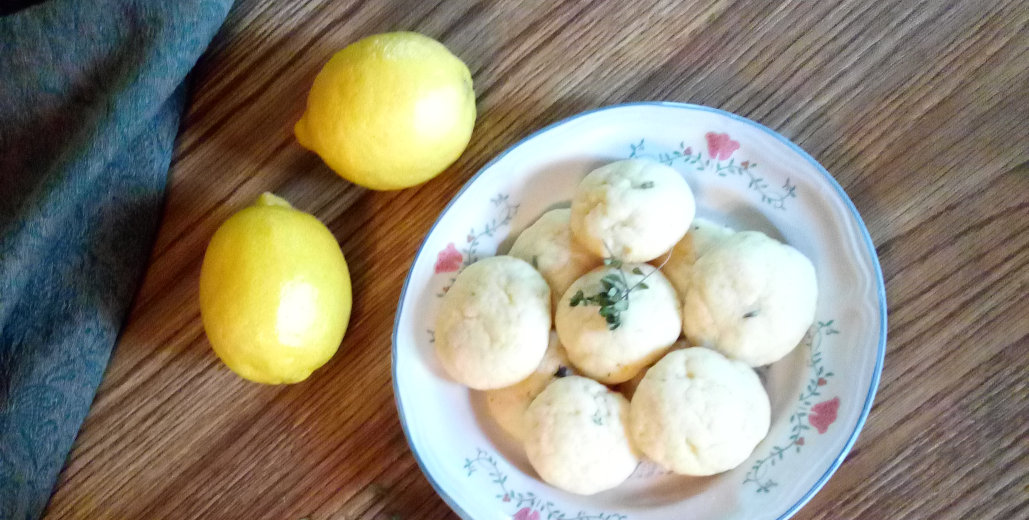
Lemon thyme is one of my favorite herbs to grow, and I’m always looking for new ways to use it. These delicate lemon thyme tea cookies are the perfect backdrop for the bright herbal flavor of lemon thyme. They are an elegant addition to any tea party!

I made these cookies for a bridal shower a few weeks ago, and the bride-to-be liked them so much that she requested them for her wedding as well! I was happy to oblige, because not only are these cookies dainty and delicious, they’re also quite simple to make.

In fact, as far as cookie recipes go, this one definitely belongs in the category of easy, no-fuss recipes.

I based this recipe on a lavender tea cookie, because I thought that recipe provided a nice balance of sweet and floral notes. Instead of dried lavender flowers, I used dried lemon thyme leaves, fresh lemon zest, and a bit of lemon extract.

That sounds like a lot of lemon, but the flavor really isn’t overpowering. These sweet cookies have just enough lemon to complement a nice cup of tea.

If you like herbal flavors, or just want a new cookie recipe to try, I suggest you make a batch of these summery lemon thyme tea cookies. I think you will be pleasantly surprised at their delicate flavoring.

Head over to The Tea Caddy for some of my favorite teas to pair them with!

These lemony tea cookies pair perfectly with your favorite tea for a special occasion or just a quiet afternoon with a friend.

What is Lemon Thyme?

Lemon thyme is not, perhaps, a very common herb – in gardens or in kitchens. I should know, because I have a hard time finding recipes to use it in!

Lemon thyme (Thymus citriodorus) is a variant of common English or German thyme (Thymus vulgaris). It looks just like common thyme, but smells and tastes like lemon. And thyme. It’s pretty wonderful!

Apparently, it is unknown whether this plant is a natural variant of common thyme, or a hybrid of two different plants. In any case, it comes from the Mediterranean region and has been around for at least 200 years. The plant can be found in the South of France, Italy, Spain, and northern Africa. You can read more about lemon thyme here.

Ingredient Notes

Shortening Options

If you don’t like to use hydrogenated shortening, there are other options. You can use all butter, but the cookies won’t be quite as soft, and they are more likely to spread out while baking unless you chill the dough thoroughly first.

Another option is to use palmfruit shortening (or palm oil), which is naturally solid at room temperature. This oil is not hydrogenated, so it does not cause the unwanted effects of regular vegetable shortening. This is what I typically use when a recipe calls for shortening.

Lemon Thyme

For this recipe, I use whole dried leaves of the lemon thyme plant. For some, seeing leaves in their cookie might be off-putting. I understand, and you are welcome to crush your lemon thyme leaves first if this is an issue! My family is used to seeing herbs in their food, so it doesn’t bother them any more. I happen to like seeing the little leaves curling through my cookie!

I have only used dried lemon thyme in this recipe, but fresh leaves should work just as well. Recipes often call for a greater amount of fresh herbs than dried; however, I would recommend starting with the same amount if you are substituting fresh lemon thyme. A cookie chock-full of leaves might not look very appetizing, even if you do like herbs!

These lemony tea cookies pair perfectly with your favorite tea for a special occasion or just a quiet afternoon with a friend.

Method

Before you start, make sure your butter is at room temperature. Cold butter won’t mix well with shortening, resulting in an uneven texture.

Cream the butter, shortening, and sugar together in a large mixing bowl until light and fluffy. Add the eggs, vanilla, and lemon extract, mixing until combined.

In another bowl, combine the flour, baking powder, and salt. Stir in lemon thyme leaves and lemon zest. Gradually add the flour mixture to the butter mixture until combined.

Chill the dough in the refrigerator for 20-30 minutes. I usually just put the entire mixing bowl in the fridge. You can skip this step if you’re not particular about the shape of the cookies. Chilling the dough does help them to stay more compact and rounded, if that is the shape you want.

Heat your oven to 375 degrees Fahrenheit. I do this while the cookies are chilling, because my oven takes a long time to heat up!

Form the cookies into 3/4″ balls and place on ungreased baking sheets. Bake for 8-10 minutes, or until the bottoms are golden brown. Cooling the baking sheets between batches helps to prevent the cookies from spreading out too much.

Remove the cookies from the baking sheets to cool, and enjoy the delicious fragrance of lemon thyme tea cookies wafting through your kitchen!

Happy baking!

~Kimberly

Print Recipe
3 from 1 vote

Lemon Thyme Tea Cookies

These lovely little cookies will add a touch of simple elegance to any tea party. With their bright lemon and herbal flavors, these dainty treats are perfect for special occasions.
Prep Time15 minutes
Cook Time30 minutes
Chilling20 minutes
Total Time1 hour 5 minutes
Course: Dessert
Keyword: Cookies, Lemon Thyme, Tea Party
Servings: 5 dozen

Ingredients

  • 1/2 cup butter softened
  • 1/2 cup shortening
  • 1 1/4 cups sugar
  • 2 eggs
  • 1 tsp vanilla extract
  • 1/2 tsp lemon extract
  • 2 1/4 cups all-purpose flour unbleached
  • 1/2 tsp salt
  • 1 tsp baking powder
  • 4 tsp lemon thyme leaves dried
  • 1 tsp lemon zest

Instructions

  • Cream together the butter, shortening, and sugar in a large mixing bowl until light and fluffy.
  • Add eggs, vanilla, and lemon extracts, and mix until combined.
  • In another bowl, combine the flour, salt, and baking powder. Stir in the lemon thyme and lemon zest.
  • Gradually add the flour mixture to the creamed mixture until combined.
  • Chill the dough for 20-30 minutes.
  • Heat the oven to 375 degrees F. Form the dough into 3/4" balls and place on ungreased baking sheets.
  • Bake for 8-10 minutes, until the bottoms of the cookies are golden brown.
Posted on 5 Comments

Simple Strawberry Jam with Dutch Jell

Strawberry jam is simple to make with this quick and easy recipe!
strawberry jam is simple to make with this quick and easy recipe!

There is a short way to make jam, and there is a long way. The long way involves cooking fruit and sugar until the mixture begins to thicken on its own. The short way uses added pectin to speed up the process. 

In general, I like to do things the old-fashioned way, which is typically the longer way. However, there are times when I just need to make jam and don’t have all day to do it! This recipe is simple, fail proof, and takes less than an hour from start to finish! Oh, and the jam is also delicious.

Today was one of those days when my to-do list seemed endless and the children clamored constantly for my attention. It was definitely a day for quick jam-making.

I’ve had strawberries sitting in my refrigerator for nearly a week, begging me to turn them into jam. I kept postponing Canning Day because I was busy preparing goodies for a bridal shower. Now that the shower is over and my kitchen is starting to resume its normal appearance, I had time to focus on jam.

This post contains affiliate links. If you click the links and make a purchase, I may receive a small commission. You can read my full disclosure here.

What equipment do you need to make jam?

  • Water bath canner or pressure canner tall enough to cover your jars with an inch of water. You can substitute a large pot if necessary, if you have a rack to hold the jars up off of the bottom of the pot.
  • Canning jars, lids, and rings. I used 5 pint jars for this recipe.
  • Large stockpot for cooking the jam
  • Potato masher for crushing the berries
  • Wooden spoon
  • Ladle
  • Jar lifter
  • Canning funnel
  • Clean tea towel

The process of making jam using pectin really doesn’t take long once you gather all of your equipment. In fact, what takes the most time is waiting for the water in your water bath canner to boil. I suggest filling that first, before making the jam, so it will be hot by the time you need it.

Sterilizing Jars

There are several different ways to prepare canning jars. The basic concept is that jars and lids need to be sterilized before they are used to store food, or the contents may spoil. Also, the jars should be hot if you are going to fill them with hot jam. Filling cool jars with hot foods may cause the jars to crack.

One way to sterilize jars is to run them through your dishwasher. Another way is to boil them in a pot of water for a few minutes. 

I usually place my empty jars, along with unscrewed rings and lids, in the water bath canner while it is heating. If you don’t want to fish the rings and lids out of a tall pot of boiling water, try boiling them separately in a small pot.

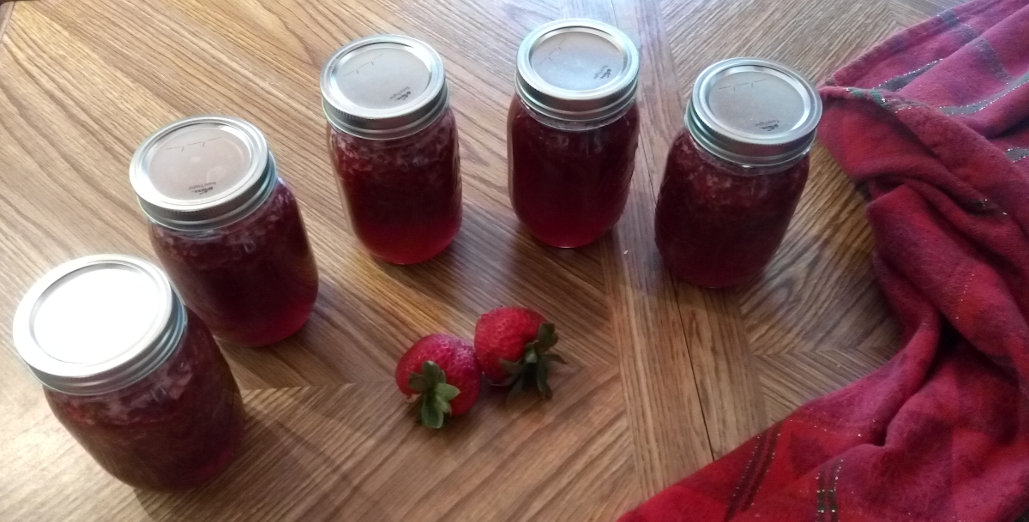
This simple strawberry jam recipe yields 5 pints in under an hour. It is made with Dutch Jell, a natural powdered pectin.

Ingredients

Quick-cook jams can be very simple. For this recipe, you need only strawberries, sugar, and powdered pectin. I use Dutch Jell, but you can substitute a box of another powdered pectin if you wish.

Dutch Jell is a powdered pectin that is sold in bulk packages. I make sure to restock my supply when I visit my in-laws in Pennsylvania, but you can also find it online. The original recipe for strawberry jam from the Dutch Jell company suggests using a rounded 1/3 cup for each batch. This made my jam a bit too gelatinous for my taste, so I just use a level 1/3 cup.

The strawberries should be at their peak of ripeness. If they are underripe, the jam won’t have much flavor. Rinse the berries in cool water and cut off any bad spots with a paring knife.

As for sugar, I have used granulated white sugar and evaporated cane sugar with equally good results. 

Method

Fill your water bath canner with water to about the height of your canning jars. Once you place filled jars in the canner, the water should be deep enough to cover them by about an inch. Place the canner on your stovetop and heat it over the largest burner while you prepare the jam.

If your strawberries are large, cut them into quarters. Small berries may be halved.

Rinse the strawberries under cool water. Hull them and cut off any bad parts with a paring knife. If the berries are large, cut them in quarters; halves are fine for smaller berries. Transfer the berries to a large stockpot. Crush them with a potato masher until they are soupy and no large chunks remain. Unless, of course, you happen to like large chunks in your jam!

Crush the berries in a large stockpot to release the juices. A potato masher works well.

Add the Dutch Jell to the strawberries in the pot and stir well. If you are using a different brand of pectin, read the directions to make sure you add the pectin at the right time.

Measure the sugar into a large bowl. It needs to be added all at once, so don’t wait until the jam is boiling to start measuring it!

Add the sugar to the strawberries all at once.

Bring the berries and Dutch Jell to a boil, stirring frequently. Add the sugar all at once and continue stirring until the mixture begins to foam up. Skim off the light pink foam with a large spoon or a measuring cup. Don’t worry if you don’t get every bit of foam; just stir it back into the jam.

When the jam foams up, skim the light pink foam off the surface. Don't worry about getting every last bit, or you'll remove too much jam along with it.
When the jam foams up, skim the light pink foam off the surface. Don’t worry about getting every last bit, or you’ll remove too much jam along with it.

Once the jam comes to a full rolling boil, continue to cook the jam, stirring constantly, for one minute. Remove from the heat.

Prepare your workspace so that everything is within reach while you’re working with the hot jam. Carefully remove the hot jars, lids, and rings from the boiling water. 

Making strawberry jam: ladling into jars.
Prepare your workspace so that everything is within reach. Place the jar close to the pot of jam to prevent drips.

Set one jar next to the pot of jam. Set the canning funnel in the mouth of the jar. Ladle jam into the jar, leaving ½” of headspace (this should be about level with the bottom of the canning funnel). 

Remove the canning funnel from the jar and set aside. Dip a corner of the clean towel into the pot of hot water. Use it to wipe all around the rim of the jam-filled jar. Sticky residue on the rim can interfere with the seal.

Wipe around the rim of the jar to remove any sticky jam residue.

Place a lid on the jar, then screw a ring on. You may want to hold the hot jar with a towel or pot holder. Screw the ring until it is fingertip-tight. You don’t need to screw it on as hard as you can!

Set the jar into the water bath canner, using the jar lifter. Repeat the process with the remaining jars. If you have some jam remaining which doesn’t quite fill a jar, don’t try to can it. Just refrigerate the partially-full jar after it cools, and consume it first.

Canning strawberry jam: boiling water bath
Use a jar lifter to place jam jars into the canner. Be careful of the hot steam!

Once all the jars have been filled and placed in the water bath canner, check the water to see if it is still boiling. If not, cover with a lid and return to a boil. 

When the water boils, set a timer for ten minutes. The canner does not need to be covered during the boiling water bath. Leave the jars undisturbed in the canner for ten minutes, then remove them one by one with the jar lifter and set aside to cool. 

You will hear a popping sound when each jar seals. This can take a few seconds up to several minutes. 

Mmm, fresh strawberry jam with sourdough bread. What a treat!

After the jars have cooled, don’t forget to label them with the date and contents! Strawberry jam will keep in sealed jars at room temperature for over a year.

strawberry jam is simple to make with this quick and easy recipe!
Print Recipe
2 from 1 vote

Simple Strawberry Jam with Dutch Jell

Looking for a quick and easy strawberry jam recipe? This recipe yields 5 pints of jam in under an hour!
Prep Time10 minutes
Cook Time10 minutes
Boiling Water Bath10 minutes
Total Time30 minutes
Course: Condiments
Keyword: Jam, Strawberries
Servings: 5 pints

Equipment

  • Water bath canner or pressure canner
  • pint jars, lids, and rings
  • stockpot
  • potato masher
  • wooden spoon
  • ladle
  • jar lifter
  • canning funnel
  • clean tea towel

Ingredients

  • 2 lbs. strawberries rinsed, hulled, and quartered
  • 7 cups sugar
  • 1/3 cup Dutch Jell powdered pectin

Instructions

  • Fill a water bath canner or pressure canner with water to cover your jars. Set it over high heat and bring to a boil.
  • Sterilize jars and lids in boiling water or in your dishwasher.
  • Place strawberries in a large stockpot and crush to release juices. Stir in Dutch Jell. Bring to a boil over medium heat, stirring occasionally.
  • While the strawberries are cooking, measure the sugar into a large bowl. When the strawberries begin to boil, add the sugar all at once and stir well until combined.
  • Return the mixture to a boil, stirring frequently. Skim foam off the surface with a large spoon or a measuring cup. Boil and stir the jam for one minute, then remove from the heat.
  • Ladle jam into hot jars, using a canning funnel. Wipe around the rim of each jar before placing a lid on it. Fingertip-tighten the ring around the mouth of the jar.
  • Use a jar lifter to place the jars into the water bath canner. Boil for 10 minutes, then remove jars to cool.
  • When the jars have cooled, check the seals and label the jars with contents and date. Strawberry jam will keep in sealed jars at room temperature for over a year.

Notes

You may substitute other brands of powdered pectin for the Dutch Jell. 1/3 cup Dutch Jell is equal to one box of powdered pectin. Be sure to read the instructions on the box before proceeding with the recipe.
3 ingredients is all it takes to make delicious strawberry jam in under an hour!