Posted on 1 Comment

Lovely Lemon Ginger Scones

With their sweet lemon glaze and bursts of ginger, these tender scones will tantalize your tastebuds!
With their sweet lemon glaze and bursts of zingy ginger, these tender scones will tantalize your tastebuds!

Lemon scone recipes have always been frustrating to me. On the one hand, I want a zingy lemon flavor; but on the other hand, it can’t be too sour. And I like my scones to be light and delicate in texture.

I think perhaps the reason it’s so hard to achieve this combination is that lemon juice is usually used to flavor lemon scones. However, fruit juices are not the best liquids to use in scones, as they tend to make the dough heavy. Cream is much better if you’re trying to make flaky scones.

Searching for the best lemon scone recipe

Earlier this week, I decided it was time to solve my scone conundrum. Armed with some scone lore, a few tested recipes, and plenty of lemons, we rolled up our sleeves and got to work.

My two year-old even helped to squeeze some lemons, until I caught him trying to drink all the lemon juice! He informed me that “it is pretty sour.” That didn’t seem to deter him!

My son loves to help in the kitchen!

I adapted one frustrating recipe (which I’ve been making for years, always saying I need to find a better version), and came out with these lovely lemon ginger scones.

I knew that it would take a lot of lemon juice to get the flavor I wanted, but that would ruin the texture of my scones. So I opted to use a minimal amount of juice and add more lemon zest instead.

The scones rose beautifully, but their flavor was still very light, so I made a lemon glaze to add just the right amount of sweet, lemony flavor.

Ginger is a nice complement to the lemon. I used candied ginger for zing, but it’s not enough to overpower the lemon. Chopped finely, it adds little bursts of flavor to liven up the scones.

That might be flavorful enough for some, but I love lemons! If you want even more lemon flavor, I suggest serving these delightful scones with lemon curd. Now that’s a lemon scone!

Candied ginger and fresh lemon juice & zest pair nicely in these scones.

Method

Preheat your oven to 425 degrees Fahrenheit. Butter a large baking sheet and set aside.

In a large bowl, combine the flour, sugar, salt, and baking powder. Give the mixture a good stir.

Cut the butter into chunks, then add it to the flour mixture. Using a pastry blender or a fork, cut in the butter until it is in pea-sized pieces.

Beat the eggs lightly with a fork, and mix in the lemon juice and half & half cream. Fresh lemon juice is best, because the flavor is stronger. You can substitute bottled lemon juice in a pinch.

For the cream, there are a few different options. I generally use half & half cream, but you can use heavy cream if you prefer. Whole milk will also work just fine, although the texture might be a bit less flaky. Sometimes I use part cream and part milk.

Pour the liquids into the flour mixture and stir gently to combine. Add the lemon zest and chopped, candied ginger, and stir until the dough comes together.

Turn the dough out onto a lightly floured board or countertop and knead it gently 6-8 times. Gentle kneading is key for making light, feathery scones.

A gentle touch is important when shaping the scone dough!

Pat the dough out gently into an 8- or 9-inch round. It will be about 3/4″ thick. Using a large, sharp knife, cut the round into eight wedges. Transfer the scones to the buttered baking sheet, separating them by at least 1/2″.

Brush the scones with a little milk for a pretty finish. Milk doesn’t turn out as shiny as eggs when brushed oved breads, but it adds a nice touch. You may sprinkle the scones with sugar before baking if you don’t wish to make a lemon glaze.

Brushing the scones with milk before baking gives them a delicate, almost pearly finish.

Bake for 12-15 minutes, until the bottoms are golden brown and the edges begin to brown. Remove from the baking sheet to a wire rack to cool.

For the glaze, measure the powdered sugar into a bowl. Cut in the butter with a fork until the mixture looks crumbly. Drizzle in about a tablespoon of lemon juice, and mix well. If the glaze still seems too thick, drizzle in a bit more lemon juice, but no more than a teaspoon at a time, until it reaches the desired consistency.

These light and tender lemon ginger scones have a sweet lemony glaze and zingy bursts of candied ginger.

When the scones are cool, drizzle them with the lemon glaze. Enjoy!

Happy baking!

~Kimberly

Lemon Ginger Scones

These feathery scones will tantalize your tastebuds with their sweet lemon glaze and bursts of zingy candied ginger.
Prep Time15 minutes
Cook Time15 minutes
Total Time30 minutes
Course: Breads
Keyword: Bread, Ginger, Lemon, Scones, Tea Party
Servings: 8 scones

Ingredients

  • 2 cups all-purpose flour unbleached
  • 4 tbsp sugar
  • 1 tsp salt
  • 2 1/2 tsp baking powder
  • 4 tbsp cold butter cubed
  • 2 eggs lightly beaten
  • 1/2 cup cream or milk + extra for brushing over scones
  • 4 tbsp lemon juice divided
  • 1 tsp lemon zest
  • 2 tbsp candied ginger finely chopped
  • 3/4 cup confectioner's sugar
  • 1 1/2 tbsp butter

Instructions

  • Preheat your oven to 425 degrees F. Butter a large baking sheet and set aside.
  • In a large bowl, combine the flour, sugar, salt, and baking powder. Cut in butter until it is in pea-sized pieces.
  • Combine eggs, cream, and lemon juice. Pour into flour mixture and stir gently.
  • Add lemon zest and candied ginger. Mix until just combined.
  • Turn dough out onto a floured board. Knead gently 6-8 times. Pat into an 8- or 9-inch round. Cut into 8 wedges with a sharp knife.
  • Transfer scones to the prepared baking sheet. Brush tops of scones with milk. Bake for 12-15 minutes, until edges are lightly browned. Remove to a wire rack to cool.
  • Make the glaze: cut the butter into the confectioner's sugar with a fork until crumbly. Drizzle in 1 tbsp of lemon juice and mix thoroughly. If needed, drizzle in more lemon juice, but no more than 1 tsp at a time, until the desired consistency is reached.
  • Drizzle glaze over scones when cool.

Notes

If desired, sprinkle sugar over the tops of scones before baking them instead of glazing them.
Posted on 3 Comments

Lemon Thyme Tea Cookies

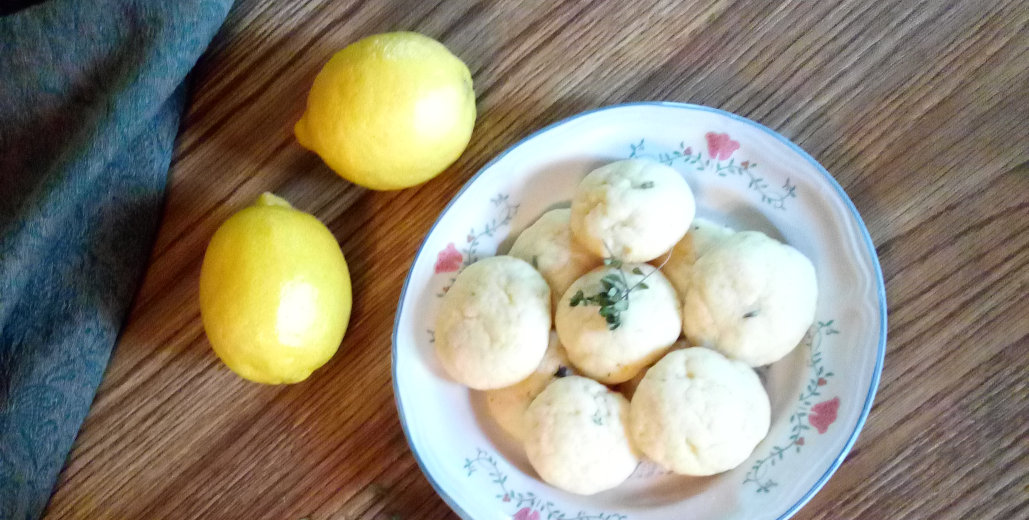
These lovely lemon thyme tea cookies have a bright lemon and herbal flavor that's sure to delight!
These lovely lemon thyme tea cookies have a bright lemon and herbal flavor that’s sure to delight!

Lemon thyme is one of my favorite herbs to grow, and I’m always looking for new ways to use it. These delicate lemon thyme tea cookies are the perfect backdrop for the bright herbal flavor of lemon thyme. They are an elegant addition to any tea party!

I made these cookies for a bridal shower a few weeks ago, and the bride-to-be liked them so much that she requested them for her wedding as well! I was happy to oblige, because not only are these cookies dainty and delicious, they’re also quite simple to make.

In fact, as far as cookie recipes go, this one definitely belongs in the category of easy, no-fuss recipes.

I based this recipe on a lavender tea cookie, because I thought that recipe provided a nice balance of sweet and floral notes. Instead of dried lavender flowers, I used dried lemon thyme leaves, fresh lemon zest, and a bit of lemon extract.

That sounds like a lot of lemon, but the flavor really isn’t overpowering. These sweet cookies have just enough lemon to complement a nice cup of tea.

If you like herbal flavors, or just want a new cookie recipe to try, I suggest you make a batch of these summery lemon thyme tea cookies. I think you will be pleasantly surprised at their delicate flavoring.

Head over to The Tea Caddy for some of my favorite teas to pair them with!

These lemony tea cookies pair perfectly with your favorite tea for a special occasion or just a quiet afternoon with a friend.

What is Lemon Thyme?

Lemon thyme is not, perhaps, a very common herb – in gardens or in kitchens. I should know, because I have a hard time finding recipes to use it in!

Lemon thyme (Thymus citriodorus) is a variant of common English or German thyme (Thymus vulgaris). It looks just like common thyme, but smells and tastes like lemon. And thyme. It’s pretty wonderful!

Apparently, it is unknown whether this plant is a natural variant of common thyme, or a hybrid of two different plants. In any case, it comes from the Mediterranean region and has been around for at least 200 years. The plant can be found in the South of France, Italy, Spain, and northern Africa. You can read more about lemon thyme here.

Ingredient Notes

Shortening Options

If you don’t like to use hydrogenated shortening, there are other options. You can use all butter, but the cookies won’t be quite as soft, and they are more likely to spread out while baking unless you chill the dough thoroughly first.

Another option is to use palmfruit shortening (or palm oil), which is naturally solid at room temperature. This oil is not hydrogenated, so it does not cause the unwanted effects of regular vegetable shortening. This is what I typically use when a recipe calls for shortening.

Lemon Thyme

For this recipe, I use whole dried leaves of the lemon thyme plant. For some, seeing leaves in their cookie might be off-putting. I understand, and you are welcome to crush your lemon thyme leaves first if this is an issue! My family is used to seeing herbs in their food, so it doesn’t bother them any more. I happen to like seeing the little leaves curling through my cookie!

I have only used dried lemon thyme in this recipe, but fresh leaves should work just as well. Recipes often call for a greater amount of fresh herbs than dried; however, I would recommend starting with the same amount if you are substituting fresh lemon thyme. A cookie chock-full of leaves might not look very appetizing, even if you do like herbs!

These lemony tea cookies pair perfectly with your favorite tea for a special occasion or just a quiet afternoon with a friend.

Method

Before you start, make sure your butter is at room temperature. Cold butter won’t mix well with shortening, resulting in an uneven texture.

Cream the butter, shortening, and sugar together in a large mixing bowl until light and fluffy. Add the eggs, vanilla, and lemon extract, mixing until combined.

In another bowl, combine the flour, baking powder, and salt. Stir in lemon thyme leaves and lemon zest. Gradually add the flour mixture to the butter mixture until combined.

Chill the dough in the refrigerator for 20-30 minutes. I usually just put the entire mixing bowl in the fridge. You can skip this step if you’re not particular about the shape of the cookies. Chilling the dough does help them to stay more compact and rounded, if that is the shape you want.

Heat your oven to 375 degrees Fahrenheit. I do this while the cookies are chilling, because my oven takes a long time to heat up!

Form the cookies into 3/4″ balls and place on ungreased baking sheets. Bake for 8-10 minutes, or until the bottoms are golden brown. Cooling the baking sheets between batches helps to prevent the cookies from spreading out too much.

Remove the cookies from the baking sheets to cool, and enjoy the delicious fragrance of lemon thyme tea cookies wafting through your kitchen!

Happy baking!

~Kimberly

Print Recipe
3 from 1 vote

Lemon Thyme Tea Cookies

These lovely little cookies will add a touch of simple elegance to any tea party. With their bright lemon and herbal flavors, these dainty treats are perfect for special occasions.
Prep Time15 minutes
Cook Time30 minutes
Chilling20 minutes
Total Time1 hour 5 minutes
Course: Dessert
Keyword: Cookies, Lemon Thyme, Tea Party
Servings: 5 dozen

Ingredients

  • 1/2 cup butter softened
  • 1/2 cup shortening
  • 1 1/4 cups sugar
  • 2 eggs
  • 1 tsp vanilla extract
  • 1/2 tsp lemon extract
  • 2 1/4 cups all-purpose flour unbleached
  • 1/2 tsp salt
  • 1 tsp baking powder
  • 4 tsp lemon thyme leaves dried
  • 1 tsp lemon zest

Instructions

  • Cream together the butter, shortening, and sugar in a large mixing bowl until light and fluffy.
  • Add eggs, vanilla, and lemon extracts, and mix until combined.
  • In another bowl, combine the flour, salt, and baking powder. Stir in the lemon thyme and lemon zest.
  • Gradually add the flour mixture to the creamed mixture until combined.
  • Chill the dough for 20-30 minutes.
  • Heat the oven to 375 degrees F. Form the dough into 3/4" balls and place on ungreased baking sheets.
  • Bake for 8-10 minutes, until the bottoms of the cookies are golden brown.
Posted on 5 Comments

Simple Strawberry Jam with Dutch Jell

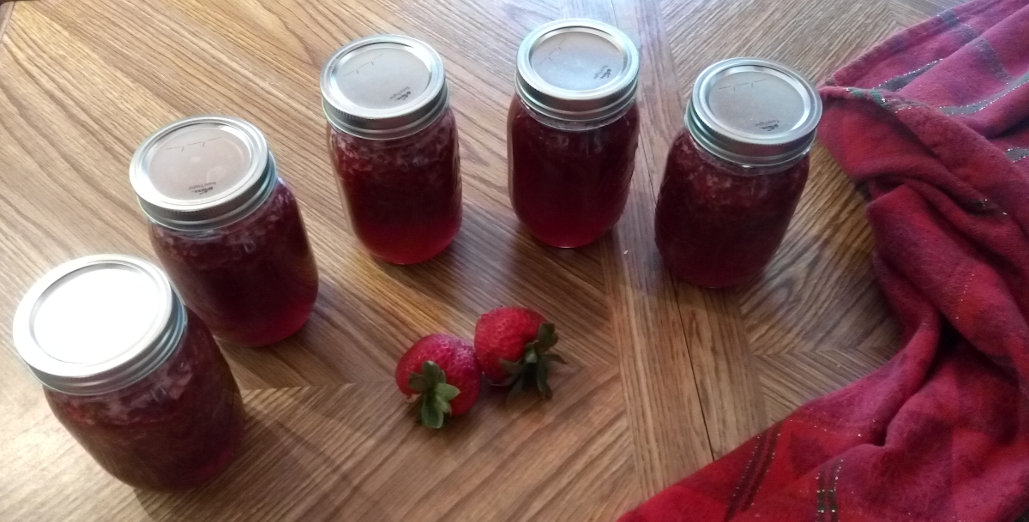
Strawberry jam is simple to make with this quick and easy recipe!
strawberry jam is simple to make with this quick and easy recipe!

There is a short way to make jam, and there is a long way. The long way involves cooking fruit and sugar until the mixture begins to thicken on its own. The short way uses added pectin to speed up the process. 

In general, I like to do things the old-fashioned way, which is typically the longer way. However, there are times when I just need to make jam and don’t have all day to do it! This recipe is simple, fail proof, and takes less than an hour from start to finish! Oh, and the jam is also delicious.

Today was one of those days when my to-do list seemed endless and the children clamored constantly for my attention. It was definitely a day for quick jam-making.

I’ve had strawberries sitting in my refrigerator for nearly a week, begging me to turn them into jam. I kept postponing Canning Day because I was busy preparing goodies for a bridal shower. Now that the shower is over and my kitchen is starting to resume its normal appearance, I had time to focus on jam.

This post contains affiliate links. If you click the links and make a purchase, I may receive a small commission. You can read my full disclosure here.

What equipment do you need to make jam?

  • Water bath canner or pressure canner tall enough to cover your jars with an inch of water. You can substitute a large pot if necessary, if you have a rack to hold the jars up off of the bottom of the pot.
  • Canning jars, lids, and rings. I used 5 pint jars for this recipe.
  • Large stockpot for cooking the jam
  • Potato masher for crushing the berries
  • Wooden spoon
  • Ladle
  • Jar lifter
  • Canning funnel
  • Clean tea towel

The process of making jam using pectin really doesn’t take long once you gather all of your equipment. In fact, what takes the most time is waiting for the water in your water bath canner to boil. I suggest filling that first, before making the jam, so it will be hot by the time you need it.

Sterilizing Jars

There are several different ways to prepare canning jars. The basic concept is that jars and lids need to be sterilized before they are used to store food, or the contents may spoil. Also, the jars should be hot if you are going to fill them with hot jam. Filling cool jars with hot foods may cause the jars to crack.

One way to sterilize jars is to run them through your dishwasher. Another way is to boil them in a pot of water for a few minutes. 

I usually place my empty jars, along with unscrewed rings and lids, in the water bath canner while it is heating. If you don’t want to fish the rings and lids out of a tall pot of boiling water, try boiling them separately in a small pot.

This simple strawberry jam recipe yields 5 pints in under an hour. It is made with Dutch Jell, a natural powdered pectin.

Ingredients

Quick-cook jams can be very simple. For this recipe, you need only strawberries, sugar, and powdered pectin. I use Dutch Jell, but you can substitute a box of another powdered pectin if you wish.

Dutch Jell is a powdered pectin that is sold in bulk packages. I make sure to restock my supply when I visit my in-laws in Pennsylvania, but you can also find it online. The original recipe for strawberry jam from the Dutch Jell company suggests using a rounded 1/3 cup for each batch. This made my jam a bit too gelatinous for my taste, so I just use a level 1/3 cup.

The strawberries should be at their peak of ripeness. If they are underripe, the jam won’t have much flavor. Rinse the berries in cool water and cut off any bad spots with a paring knife.

As for sugar, I have used granulated white sugar and evaporated cane sugar with equally good results. 

Method

Fill your water bath canner with water to about the height of your canning jars. Once you place filled jars in the canner, the water should be deep enough to cover them by about an inch. Place the canner on your stovetop and heat it over the largest burner while you prepare the jam.

If your strawberries are large, cut them into quarters. Small berries may be halved.

Rinse the strawberries under cool water. Hull them and cut off any bad parts with a paring knife. If the berries are large, cut them in quarters; halves are fine for smaller berries. Transfer the berries to a large stockpot. Crush them with a potato masher until they are soupy and no large chunks remain. Unless, of course, you happen to like large chunks in your jam!

Crush the berries in a large stockpot to release the juices. A potato masher works well.

Add the Dutch Jell to the strawberries in the pot and stir well. If you are using a different brand of pectin, read the directions to make sure you add the pectin at the right time.

Measure the sugar into a large bowl. It needs to be added all at once, so don’t wait until the jam is boiling to start measuring it!

Add the sugar to the strawberries all at once.

Bring the berries and Dutch Jell to a boil, stirring frequently. Add the sugar all at once and continue stirring until the mixture begins to foam up. Skim off the light pink foam with a large spoon or a measuring cup. Don’t worry if you don’t get every bit of foam; just stir it back into the jam.

When the jam foams up, skim the light pink foam off the surface. Don't worry about getting every last bit, or you'll remove too much jam along with it.
When the jam foams up, skim the light pink foam off the surface. Don’t worry about getting every last bit, or you’ll remove too much jam along with it.

Once the jam comes to a full rolling boil, continue to cook the jam, stirring constantly, for one minute. Remove from the heat.

Prepare your workspace so that everything is within reach while you’re working with the hot jam. Carefully remove the hot jars, lids, and rings from the boiling water. 

Making strawberry jam: ladling into jars.
Prepare your workspace so that everything is within reach. Place the jar close to the pot of jam to prevent drips.

Set one jar next to the pot of jam. Set the canning funnel in the mouth of the jar. Ladle jam into the jar, leaving ½” of headspace (this should be about level with the bottom of the canning funnel). 

Remove the canning funnel from the jar and set aside. Dip a corner of the clean towel into the pot of hot water. Use it to wipe all around the rim of the jam-filled jar. Sticky residue on the rim can interfere with the seal.

Wipe around the rim of the jar to remove any sticky jam residue.

Place a lid on the jar, then screw a ring on. You may want to hold the hot jar with a towel or pot holder. Screw the ring until it is fingertip-tight. You don’t need to screw it on as hard as you can!

Set the jar into the water bath canner, using the jar lifter. Repeat the process with the remaining jars. If you have some jam remaining which doesn’t quite fill a jar, don’t try to can it. Just refrigerate the partially-full jar after it cools, and consume it first.

Canning strawberry jam: boiling water bath
Use a jar lifter to place jam jars into the canner. Be careful of the hot steam!

Once all the jars have been filled and placed in the water bath canner, check the water to see if it is still boiling. If not, cover with a lid and return to a boil. 

When the water boils, set a timer for ten minutes. The canner does not need to be covered during the boiling water bath. Leave the jars undisturbed in the canner for ten minutes, then remove them one by one with the jar lifter and set aside to cool. 

You will hear a popping sound when each jar seals. This can take a few seconds up to several minutes. 

Mmm, fresh strawberry jam with sourdough bread. What a treat!

After the jars have cooled, don’t forget to label them with the date and contents! Strawberry jam will keep in sealed jars at room temperature for over a year.

strawberry jam is simple to make with this quick and easy recipe!
Print Recipe
2 from 1 vote

Simple Strawberry Jam with Dutch Jell

Looking for a quick and easy strawberry jam recipe? This recipe yields 5 pints of jam in under an hour!
Prep Time10 minutes
Cook Time10 minutes
Boiling Water Bath10 minutes
Total Time30 minutes
Course: Condiments
Keyword: Jam, Strawberries
Servings: 5 pints

Equipment

  • Water bath canner or pressure canner
  • pint jars, lids, and rings
  • stockpot
  • potato masher
  • wooden spoon
  • ladle
  • jar lifter
  • canning funnel
  • clean tea towel

Ingredients

  • 2 lbs. strawberries rinsed, hulled, and quartered
  • 7 cups sugar
  • 1/3 cup Dutch Jell powdered pectin

Instructions

  • Fill a water bath canner or pressure canner with water to cover your jars. Set it over high heat and bring to a boil.
  • Sterilize jars and lids in boiling water or in your dishwasher.
  • Place strawberries in a large stockpot and crush to release juices. Stir in Dutch Jell. Bring to a boil over medium heat, stirring occasionally.
  • While the strawberries are cooking, measure the sugar into a large bowl. When the strawberries begin to boil, add the sugar all at once and stir well until combined.
  • Return the mixture to a boil, stirring frequently. Skim foam off the surface with a large spoon or a measuring cup. Boil and stir the jam for one minute, then remove from the heat.
  • Ladle jam into hot jars, using a canning funnel. Wipe around the rim of each jar before placing a lid on it. Fingertip-tighten the ring around the mouth of the jar.
  • Use a jar lifter to place the jars into the water bath canner. Boil for 10 minutes, then remove jars to cool.
  • When the jars have cooled, check the seals and label the jars with contents and date. Strawberry jam will keep in sealed jars at room temperature for over a year.

Notes

You may substitute other brands of powdered pectin for the Dutch Jell. 1/3 cup Dutch Jell is equal to one box of powdered pectin. Be sure to read the instructions on the box before proceeding with the recipe.
3 ingredients is all it takes to make delicious strawberry jam in under an hour!
Posted on 3 Comments

Holy Week at Home: Catholic Traditions

Learn about Holy Week traditions you can keep at home to enter into this sacred season!

One of my favorite parts about being Catholic is all the little traditions that help us to celebrate the liturgical seasons and holydays at home. The Church is old, and it’s universal. That means there are two millennia worth of traditions from all around the world. 

I love that we can borrow traditions from Italy, Czechoslovakia, England, and Mexico, no matter where we live. They might not be part of our cultural heritage, but they are a part of our faith heritage. 

Liturgical living deepens our faith by grounding it in home life and family celebrations. It makes the faith real to our children, who love traditions. And it makes me feel connected to the Church across time and space, when I follow a recipe handed down through centuries.

Holy Week is the high point of the Church year: the most sacred and solemn of days. Holy Thursday, Good Friday, and the Easter Vigil encompass the most important truths of our faith. 

Of course, the best way to enter into these days with reverence is with the Church in her liturgies. But we don’t have to stop there. 

This year, most of us do not have the opportunity to participate in the Holy Week liturgies. We find ourselves strangely at home, and might feel estranged from the Church and the rest of the faithful. 

If you find yourself wondering how to enter into the Triduum when you can’t go to church, here are some suggestions. These Holy Week traditions do not in any way take the place of the liturgies, but they go along with them harmoniously, and they can help us to adopt an attitude of reverence and worship even at home.

Cover your Statues

Veiling statues and images, crucifixes, and even altars during lent is an ancient custom. While it may seem strange to do this during a holy season, Paul Lim explains that most sacred art is “rather celebratory and signs of the Resurrection.” Veiling images of our Lord is also related to the Gospel for the Fifth Sunday of Lent, wherein Jesus hid because the Jews were trying to stone Him. 

In the United States, the custom was suppressed in 1970, but allowed again in the third edition of the GIRM: 

In the Dioceses of the United States, the practice of covering crosses and images throughout the church from this Sunday may be observed. Crosses remain covered until the end of the celebration of the Lord’s Passion on Good Friday, but images remain covered until the beginning of the Easter Vigil.

This provision allows for sacred images to be covered from the Fifth Sunday of Lent until the beginning of the Easter Vigil. Many parishes only cover their images during Holy Week, and some only on Good Friday.

I cover mine at some point during Holy Week, because that’s when I usually remember!

This is a tradition we can keep in our homes. Covering sacred artwork immediately makes our home feel different. It makes us stop and take note. We know what is underneath the coverings, but the fact that we can’t see the images really drives home the barrenness of lent and makes us focus on Christ’s Passion. 

So how do you go about covering your statues and images? It’s really pretty simple, because most religious artwork we keep in our homes is fairly small. (And easy to reach. If you’ve ever helped cover the statues and crucifix in your church, you know that can be quite a task!)

All you need are purple cloths of various sizes. Ironing them first is nice. (Don’t look at mine this year!) I have never yet been organized enough to have yards of purple fabric at the beginning of Holy Week, so I make do with whatever I have. 

Plain and somber colors are best, but purple and red are the most appropriate: purple for penitence and red for the Passion. Sometimes tape or string may be necessary to secure the cloths, if they keep sliding off of your pictures or statues.

Cover all of your religious artwork if you have enough cloth. If you run out of purple fabric, another option is to take the pictures or statues down and put them away until Easter. They do that in some churches instead of covering them.

If you want to read more about covering statues, Aleteia has a great article.

During Holy Week, we cover statues and pictures in order to focus on Christ's passion.
During Holy Week, we cover statues and pictures in order to focus on Christ’s passion. Right now, we have 14 candles set out for the Stations of the Cross.

Set up a home altar or prayer corner.

Many traditions around the world include a special table or corner shelf dedicated to family prayer in the home. You can use it as a space to display statues and sacred artwork, a Bible, and rosaries. It’s also a good place to put the blessed palms you receive on Palm Sunday, or a vial of holy water.

The purpose of a prayer corner is to make a special space in your home where you go to pray. It’s like having an oratory right in your own house. This is one way we can sanctify everyday home life and “pray without ceasing.”

During Holy Week, the liturgies have a special aura of sacredness. The home altar or prayer corner helps the solemn spirit of the liturgies permeate your home. It is a visible reminder that this week is special, set apart to focus on Christ’s Passion.

Statues and pictures should be covered, but you can still light candles and gather around the home altar for your family prayers. Especially if you have young children, lighting candles and having something to look at is helpful in fostering a prayerful attitude.

Strip your Table

At the end of the Mass of the Lord’s Supper on Holy Thursday, the Blessed Sacrament is placed on the altar of repose. Then the priest proceeds to strip the altar of candles and linens.

We can do the same thing with our home altars, or even the kitchen table. We usually cover our table with a cloth, so having it bare for a few days seems strange.

That’s the point: it signifies mourning during the period of Christ’s Passion. I find that simple practices like this are great reminders of the solemn character of the Triduum.

Traditional Foods for Holy Week

No list of Holy Week traditions would be complete without some mention of food! Preparing and eating special foods only on certain days makes them so much more significant.

Spy Wednesday

Holy Week traditions from around the world help to connect us with the whole Church in celebrating this solemn season.

Jidáše (Judas buns) are traditional Chechoslovakian rolls baked in the shape of ropes or nooses in memory of Judas’s betrayal. The dough contains lemon juice or zest to signify the sourness of sin, and the baked buns are glazed with honey to signify the sweetness of forgiveness and salvation. 

They are traditionally eaten early in the morning-before sunrise-on Maundy Thursday. They may also be eaten the day before, which is sometimes called “Spy Wednesday” because of the Gospel reading for the day. This last Gospel before the start of the Triduum details Judas’s decision to betray Jesus, and his meeting with the chief priests. 

The buns also look like money bags, which might be more comprehensible to young children.

Maundy Thursday/ Green Thursday

Holy Thursday has several different titles, and many different traditional dishes. It is called “Green Thursday” in Central Europe, after the bitter herbs which were consumed during the Passover meal. There is also a German word for mourning which may have been mistranslated to “green.”

This day used to be a fast day, on which mostly green vegetables were eaten. It is traditional to serve at least one green dish at dinner-or all the dishes, in some places! The Czechs and Moravians eat a green soup for dinner, followed by a green salad. The French make a vichyssoise (cold leek and potato soup) with 7 different herbs or greens. The Germans have their own green soup, Gründonnerstagsuppe, with 7 or 9 different herbs. 

Some traditional greens to include in the soup are: dandelion, sorrel, watercress, spinach, parsley, leeks, chives, mugwort, nettle, daisies, tansy, chicory, collards, green onions, basil, arugula, mustard or turnip greens, and beet, carrot, or radish tops.

Good Friday

What Holy Week traditions do you incorporate into your family celebrations?
Hot cross buns! These saffron buns are a specialty of Cornwall in England.

Hot Cross buns are traditional in England and all over Europe, in different variations. Italy has rosemary buns; Cornwall has saffron buns. No matter their nationality, these sweet buns always have some features in common. 

They are made with eggs and milk, which were not eaten during lent. Thus, hot cross buns mark the end of lent. The cross marked on top of the buns signifies the cross of Christ, and the spices represent those spices used to embalm Christ’s body for burial.

Another traditional Good Friday food is vinegar, or a dish made with vinegar. This is for various Scripture passages including: “They offered him wine to drink, mingled with gall; but when he tasted it, he would not drink it” (Mt 27:34, RSV). 

Greek lentil soup, Fakes Soupa, includes a splash of red wine vinegar just before serving. It’s a simple but tasty meatless meal for a fast day.

In parts of Germany, it is traditional to eat only Spätzle and stewed fruits on the evening of Good Friday. 

Make Holy Week a special time for your family with these traditional foods and practices from around the world!

***

As always, one of my favorite resources for traditional recipes is A Continual Feast, by Evelyn Birge Vitz. Another great resource for liturgical living with children is The Catholic All Year Compendium, by Kendra Tierney. 

Note: The above links are affiliate links. If you click on them and make a purchase, I may receive a small comission. You can read my full disclosure here.

For more traditional recipes, see this list of cookbooks.

What are your favorite Holy Week traditions?

~Kimberly